
Google spam updates are not penalties handed out by a person. They are improvements to automated systems, such as SpamBrain, that detect content and practices breaking Google's spam policies. Good spam update recovery starts with proving the update is really the cause, then fixing the specific practices it targets.
What Did the September 2026 Spam Update Change?
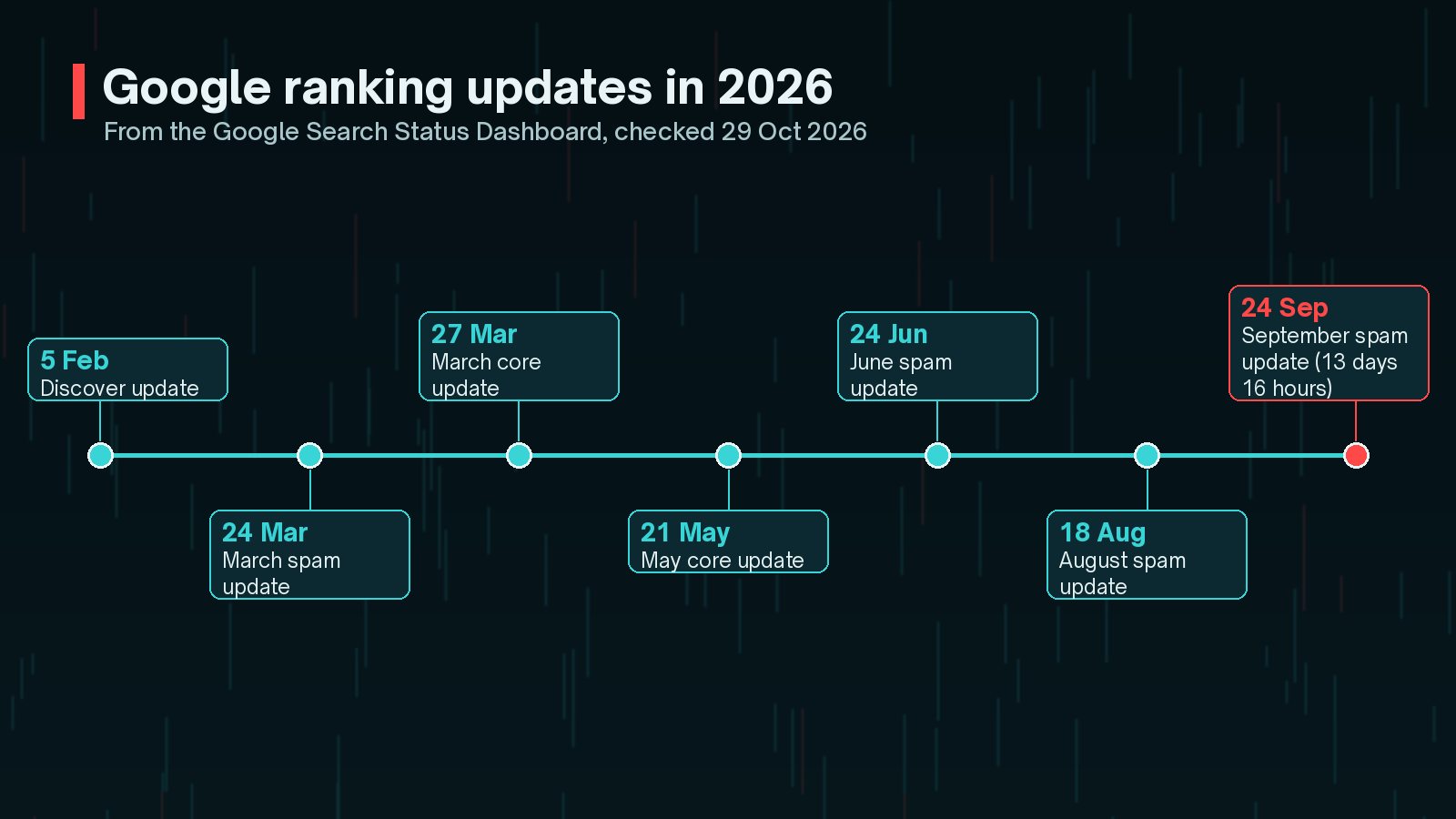
Google's Search Status Dashboard lists the September 2026 spam update as starting on 24 September 2026, with a rollout that lasted 13 days and 16 hours. Google's dashboard note said it applied globally and to all languages, and that the rollout could take up to two weeks. Search Engine Land reported completion on 8 October 2026; in India, the update began on the night of 24 September (about 21:30 IST) and finished on the afternoon of 8 October.
According to Search Engine Land, Google described it as a normal spam update with nothing specifically new. Google has not published a list of targets, so anyone claiming to know exactly what changed is guessing. What we do know is that it was the fourth spam update of 2026.
How Do I Know If My Site Was Hit by a Spam Update?
Open Search Console's Performance report and compare the 28 days before 24 September with the period after 8 October. Then look for these signs:
- The timing fits. Clicks and impressions dropped during the rollout window, not weeks before or after.
- The drop is concentrated. One section, one template or one group of pages fell much harder than the rest.
- Positions fell, not just clicks. Average position worsened for the affected pages.
- The pages share a pattern. They were mass-produced, bought, guest-hosted, keyword-stuffed or recently injected by malware.
If the whole site slid gently and evenly, or the drop started at a different time, the spam update is probably not the main cause.
Spam Update vs Core Update vs AI Overviews: Telling Them Apart
Three very different causes can look similar on a traffic graph. The fix depends on getting this right.
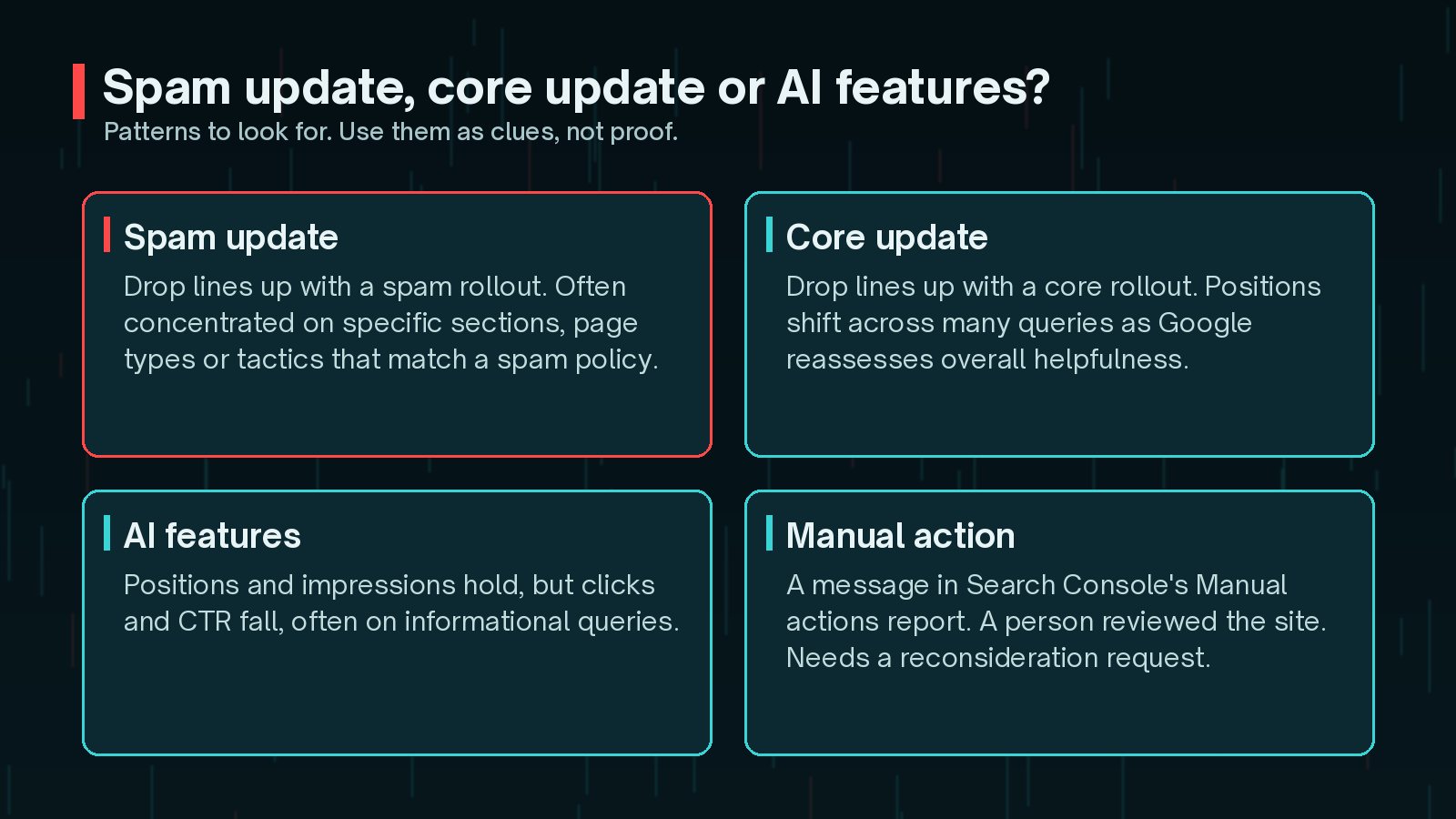
- Spam update: drop lines up with a spam rollout, often hitting particular tactics or sections.
- Core update: drop lines up with a core update, with positions shifting across many queries. The last confirmed one was the May 2026 core update.
- AI features: positions and impressions hold while clicks and CTR fall.
I go through the AI case in detail in AI Overviews vs core update: diagnosing a traffic drop. Also rule out boring causes: a broken tracking tag, a noindex left on after a redesign, a server outage or normal seasonality.
Which Google Spam Policies Catch Small Business Sites?
Google's spam policies list more than a dozen practices. These are the ones I most often see on small business and agency sites:
- Scaled content abuse: many pages generated mainly to manipulate rankings rather than help people, however they were made. Think hundreds of near-identical "service in [town]" pages. My guide to AI-generated content and Google's guidelines covers where the line sits.
- Site reputation abuse: third-party content, such as paid coupon or casino sections, published mainly to exploit the host site's ranking signals.
- Link spam: buying links, excessive link swaps or keyword-rich links in widgets and footers.
- Hacked content: spam pages, hidden links or redirects injected by malware. The Japanese keyword hack is a classic example.
- Doorway abuse, keyword stuffing and thin affiliation: pages that funnel visitors elsewhere, repeat keywords unnaturally or copy affiliate product text with no added value.

Is It a Manual Action or an Algorithmic Drop?
Check this before anything else. In Search Console, open Security & Manual Actions > Manual actions.
- "No issues detected" means any drop is algorithmic. There is no form to fill in; you fix the site and wait for Google's systems to reassess it.
- A listed manual action means a reviewer at Google found a violation. The report names the issue and the affected pages. Once every issue is fixed on every page, you can request a review.
Google's manual actions help page says a good reconsideration request explains the problem, describes the steps taken to fix it and documents the outcome. Reviews can take several days or weeks, and you should not resubmit while one is pending.
Also open the Security issues report. If Google has detected hacked content, the clean-up becomes your first priority.
How to Clean Up and Recover Step by Step
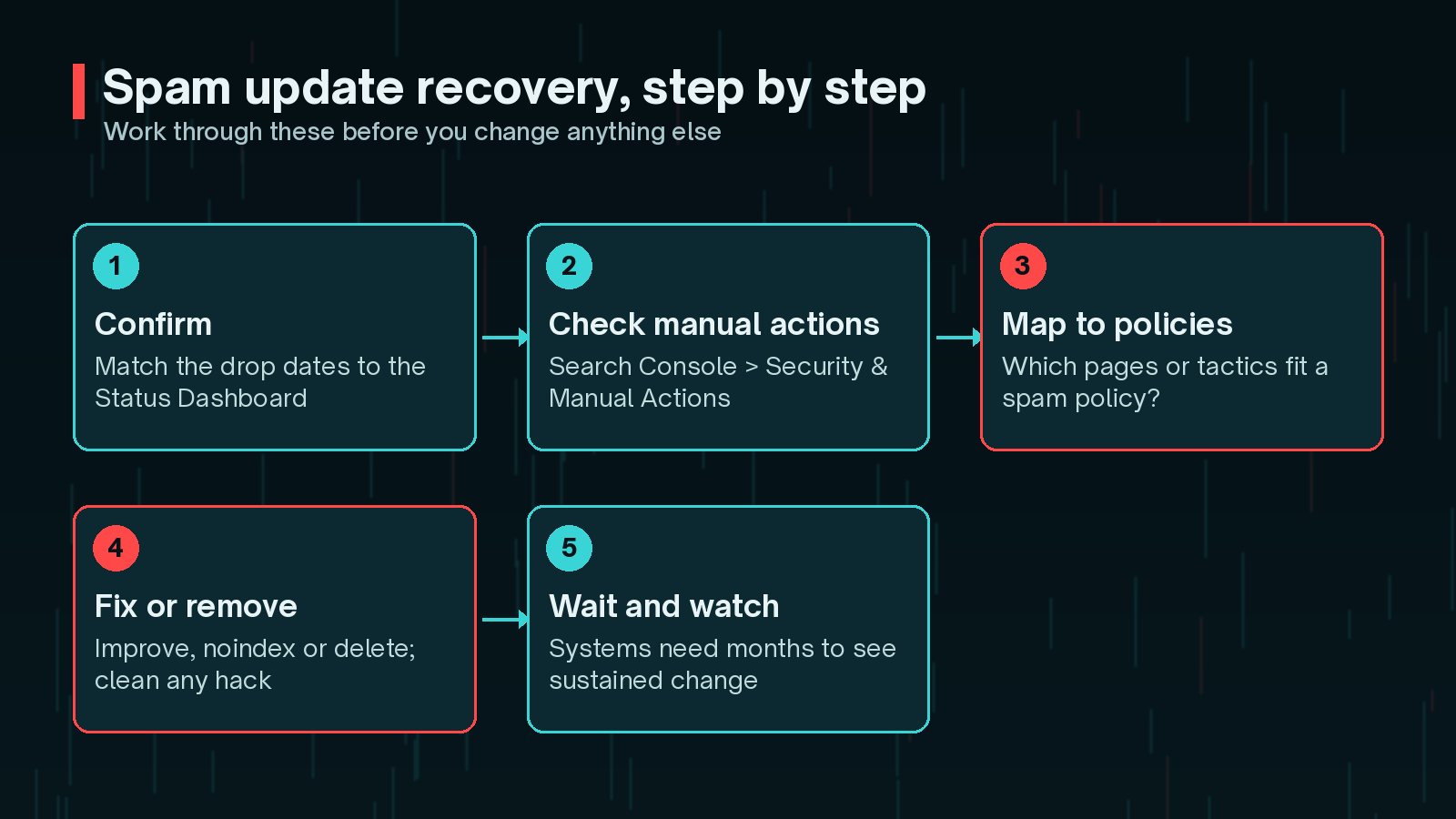
- Confirm the cause. Match the drop dates to the Status Dashboard and rule out tracking, indexing and seasonal causes.
- Check manual actions and security issues. These change the whole plan if present.
- Export the affected pages. In Performance, compare periods and sort pages by lost clicks.
- Map each page to a policy. Be honest. Would the page exist if search engines did not?
- Improve, consolidate or remove. Rewrite thin pages with real expertise, merge near-duplicates with 301 redirects, and noindex or delete pages that have no purpose for visitors.
- Remove spammy links and third-party sections. Stop buying links, take down paid placements that do not fit and add
rel="sponsored"where links are paid. - Fix the technical basics. Clean sitemaps, sensible internal linking and working canonicals help Google recrawl the improved pages. My list of technical SEO improvements that matter is a good starting point.
Do not panic-delete. Removing large parts of a site in a hurry can throw away pages that were never the problem. Fix the patterns that match a spam policy, then measure.
How Long Does Spam Update Recovery Take?
Google's own guidance is unusually direct here. If a site changes, its systems may learn over a period of months that the site complies with the spam policies. Recovery is not guaranteed to happen at the next spam update, and it does not happen overnight.
For link spam specifically, Google notes that once its systems discount spammy links, any benefit those links gave is gone for good. A site that relied on bought links may settle at a lower level that only genuine links and better content can lift.

While you wait, keep publishing genuinely useful pages, keep the site technically healthy and track the affected page group separately so you can see whether the changes are working.
Frequently Asked Questions
How long does spam update recovery take?
There is no fixed timeline. Google's guidance says that if a site makes changes, its automated systems may learn over a period of months that the site now complies with the spam policies. Plan for months, not days, and keep improving the site in the meantime.
Do I need to file a reconsideration request after a spam update?
Only if Search Console shows a manual action. Algorithmic drops from a spam update have no request process. A manual action has its own report, and you request a review there once every listed issue is fixed.
Can disavowing links fix a spam update drop?
If the problem was link spam, removing or disavowing bad links can stop future harm, but Google says any ranking benefit those links once gave cannot be regained. Recovery then depends on earning genuine value from content and legitimate links.
My site was hacked. Can a spam update affect me?
Yes. Hacked content is one of Google's listed spam policies. Injected pages, spammy redirects or hidden links can drag a site down, so clean the hack first and then request reindexing of the affected URLs.
Should I delete all AI-written pages?
Not automatically. Google's scaled content abuse policy targets pages made mainly to manipulate rankings, however they are produced. Keep pages that genuinely help people, improve thin ones and remove or noindex pages that exist only to catch searches.
Final Thoughts
A spam update drop feels personal, but the path forward is methodical. Confirm the timing, check for manual actions and security issues, map affected pages to Google's spam policies and fix the patterns rather than individual symptoms. Then give it time.
If you would like a second pair of eyes on the data, or help cleaning up a site that has picked up spam it did not create, my SEO improvement service starts with exactly this kind of diagnosis.
Official References
Sources checked on 29 October 2026: